


Poor leadership qualities include poor communication, micromanagement, favoritism, lack of accountability, and weak emotional intelligence. These behaviors lower employee morale, reduce productivity, and create unhealthy workplace environments that damage trust and team performance.
The good news is that poor leadership habits can improve with awareness and consistent effort. In this guide, you’ll learn the most common poor leadership qualities, how they affect team performance, and what leaders can do to build stronger communication, trust, and workplace culture before small problems become much bigger ones.
1. Poor Communication Creates Confusion
Poor communication is one of the most damaging leadership problems in the workplace. Teams need clear expectations, direction, and feedback to perform effectively. Addressing this issue helps improve team communication and creates a more productive work environment.
Poor communication often includes:
- Giving unclear instructions
- Avoiding difficult conversations
- Ignoring employee feedback
- Failing to explain priorities
- Not listening during discussions
In fast-moving workplaces, unclear communication often leads to missed deadlines, duplicated work, and unnecessary frustration. Over time, these issues can grow into larger leadership challenges in business environments, affecting morale and productivity.
Strong leaders communicate openly and clearly. Employees perform better when they understand expectations and feel heard.
2. How Micromanagement Hurts Employee Trust
Micromanagement damages confidence and slows team growth. Employees want guidance, but they also need space to work independently.
Micromanaging leaders often:
- Monitor every small task
- Refuse to delegate responsibilities
- Correct minor details constantly
- Focus more on control than outcomes
Over time, employees stop taking initiative because they expect criticism or constant oversight. This behavior often reflects an autocratic leadership style that limits collaboration and independence.
Strong leadership balances accountability with trust. Teams usually perform better when employees feel trusted to handle responsibilities independently.
3. Lack of Accountability Weakens Respect
Employees quickly notice when leaders avoid responsibility for mistakes or workplace problems.
Poor leadership examples include:
- Blaming employees during failures
- Making excuses instead of solutions
- Ignoring ongoing problems
- Refusing to admit mistakes
Accountability matters because leaders set the standard for workplace behavior. When managers avoid responsibility, teams often become less accountable as well.
Good leaders focus on solving problems instead of protecting their image.
4. Poor Emotional Intelligence Creates Workplace Tension
Leadership is not only about decision-making. It also involves understanding emotions, communication, and human behavior.
Leaders with poor emotional intelligence may:
- React emotionally under pressure
- Dismiss employee concerns
- Create fear-based environments
- Struggle with conflict resolution
Strong emotional intelligence helps leaders communicate more effectively, manage conflict better, and build healthier workplace relationships. Many of these behaviors are also associated with strong leadership qualities such as accountability and clear communication.
5. Inconsistent Leadership Causes Uncertainty
Teams struggle when leadership constantly changes expectations or priorities.
Inconsistent leadership may include:
- Mixed messages
- Frequent policy changes
- Unclear standards
- Favoritism
- Unpredictable behavior
This creates confusion and anxiety because employees never know what to expect.
Consistency builds trust. Employees work more confidently when leadership remains stable and fair.
6. Indecisive Leaders Slow Down Teams
Some leaders delay decisions because they fear making mistakes. Unfortunately, constant hesitation slows progress and frustrates employees.
Indecisive leadership often looks like:
- Delaying approvals
- Overthinking simple problems
- Avoiding difficult decisions
- Waiting too long to take action
When leadership lacks direction, projects stall and team momentum disappears.
Strong leaders gather information, make reasonable decisions, and adjust when needed.
7. Taking Credit for Team Success Hurts Morale
Employees notice when leaders take credit for the team’s work.
Poor leaders may:
- Ignore employee contributions
- Take public recognition for group success
- Rarely acknowledge effort
Recognition plays a major role in employee morale. Teams stay motivated when leaders openly appreciate and celebrate contributions.
Strong leaders give credit where it belongs.
8. Lack of Vision Leaves Employees Unmotivated
Employees perform better when they understand the bigger purpose behind their work.
A leader without vision may:
- Set unclear priorities
- Focus only on short-term issues
- Struggle with planning
- Fail to communicate long-term goals
Without direction, employees often feel disconnected from their work and less motivated to contribute fully.
Strong leadership gives teams clarity, purpose, and direction. Learning about effective leadership styles that encourage stronger teamwork can help leaders improve communication and long-term planning.
9. Avoiding Conflict Creates Bigger Problems
Some leaders avoid difficult conversations because they feel uncomfortable addressing workplace tension.
Conflict avoidance often leads to:
- Workplace resentment
- Communication breakdowns
- Toxic team behavior
- Ongoing unresolved issues
Healthy leadership means handling problems early, respectfully, and directly.
Ignoring conflict usually allows small problems to grow into larger workplace issues.
10. Favoritism Damages Workplace Culture

Favoritism quickly weakens trust and collaboration within teams.
Examples include:
- Giving certain employees better opportunities
- Applying different standards unfairly
- Offering unequal recognition
Employees notice unfair treatment quickly. When fairness disappears, morale and teamwork usually decline.
Strong leaders treat employees consistently and respectfully.
11. Ignoring Employee Growth Reduces Engagement
Employees want opportunities to learn, improve, and advance in their careers.
Poor leadership may involve:
- Offering little coaching or mentorship
- Ignoring employee goals
- Avoiding feedback discussions
- Providing limited support for growth
Employees stay more engaged when leaders invest in their development and encourage progress.
Even small mentoring efforts can significantly improve morale and retention.
Signs Your Team Is Suffering From Poor Leadership
Poor leadership often quickly affects workplace behavior.
Common warning signs include:
- High employee turnover
- Low morale
- Increased absenteeism
- Quiet quitting
- Poor collaboration
- Communication problems
- Reduced productivity
Employees may also stop sharing ideas because they feel ignored, discouraged, or unsupported.
Recognizing these signs early can help businesses improve workplace culture before larger problems develop.
How Leaders Can Improve Poor Leadership Habits
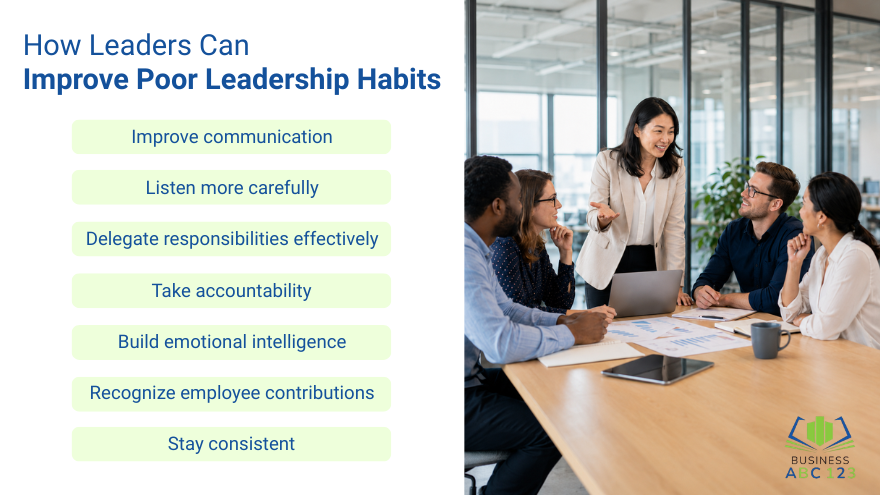
Leadership skills are not fixed. Many ineffective leadership habits can be improved through awareness, consistency, and feedback.
- Improve communication: Set clear expectations and encourage open conversations.
- Listen more carefully: Employees want to feel heard and respected.
- Delegate responsibilities effectively: Trust employees with ownership and decision-making.
- Take accountability: Own mistakes openly and focus on solutions.
- Build emotional intelligence: Learn how to manage emotions and respond calmly under pressure.
- Recognize employee contributions: Celebrate effort and give credit consistently.
- Stay consistent: Fair and predictable leadership builds trust over time.
Great leadership is usually built through small daily habits rather than perfect decisions.
Final Thoughts
Poor leadership qualities can quietly damage team morale, trust, productivity, and employee retention. Habits such as poor communication, micromanagement, favoritism, and a lack of accountability often create stress and disengagement in the workplace. Leaders who communicate clearly, support employees, and build trust usually create stronger, more productive teams and healthier workplace cultures.
FAQs
What are the most common poor leadership qualities?
Common poor leadership qualities include poor communication, micromanagement, favoritism, lack of accountability, weak emotional intelligence, and inconsistent leadership.
How does poor leadership affect employee morale?
Poor leadership lowers morale by creating stress, confusion, distrust, and a lack of support in the workplace.
Can poor leadership cause high employee turnover?
Yes. Many employees leave their jobs due to toxic leadership, unfair treatment, or poor management practices.
What is the difference between strict leadership and poor leadership?
Strict leadership focuses on accountability and clear expectations while still treating employees fairly and respectfully. Poor leadership often relies on fear, inconsistency, or lack of support.
Can poor leadership skills improve over time?
Yes. Leaders can improve through self-awareness, feedback, communication improvements, emotional intelligence, and consistent leadership habits.