


Self-leadership is the ability to manage your thoughts, emotions, and actions without external pressure. It means taking responsibility for your behavior, staying disciplined, and consistently following through on what you commit to.
Before leading a team, business, or family well, you must first learn how to lead yourself.
This guide explains the meaning, key skills, examples, benefits, and practical ways to improve it in daily life and work. Self-mastery is often the first step toward effective leadership built on trust and consistency.
Why Self-Leadership Matters in Life and Work
Self-leadership is important because people respond more to actions than words. When you can manage yourself well, you naturally build trust, respect, and consistency.
It helps you:
- Make better decisions
- Stay consistent with goals
- Handle pressure more effectively
- Build credibility in personal and professional life
Without self leadership, even strong goals often fail due to inconsistency.
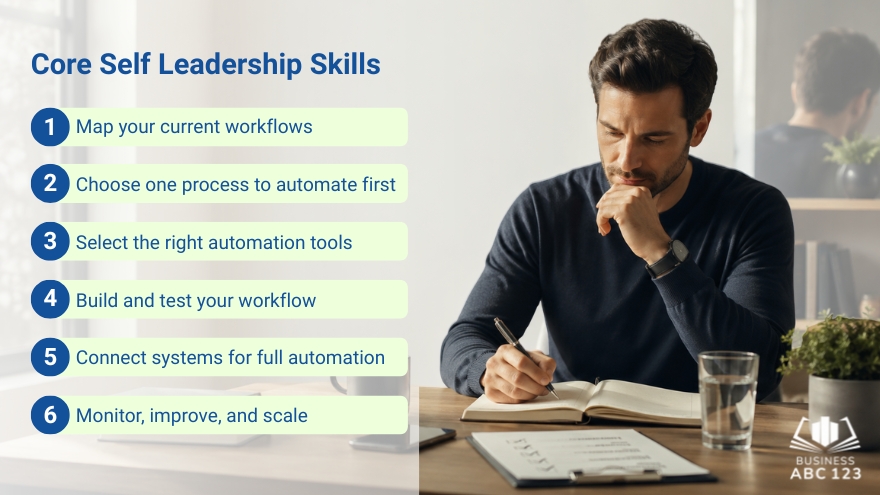
Core Self Leadership Skills
1. Self-Awareness
Knowing your strengths, weaknesses, emotions, habits, and triggers helps you grow faster. Self-aware people recognize what needs improvement and make better decisions.
2. Self-Discipline
Doing what needs to be done even when motivation is low creates steady progress. Discipline helps you stay consistent when feelings or circumstances change.
3. Self-Responsibility
Owning your mistakes, choices, and results instead of blaming others builds maturity. It also earns trust because people respect accountability.
4. Emotional Control
Responding calmly instead of reacting impulsively leads to better outcomes. Strong leaders pause, think clearly, and choose their actions wisely.
5. Self-Motivation
Creating internal drive instead of relying only on rewards or praise keeps you moving forward. Self-motivated people stay committed even when no one is watching.
6. Time Management
Using time intentionally and prioritizing what matters most. Many of these same habits also appear in strong leadership qualities like discipline and clear direction.
Signs You Need to Improve Self-Leadership
You may need stronger self leadership if you often:
- Delay important tasks
- Break commitments to yourself
- Depend heavily on motivation
- React emotionally under stress
- Feel disorganized with time
- Avoid responsibility
- Start goals but rarely finish
How to Improve Self-Leadership
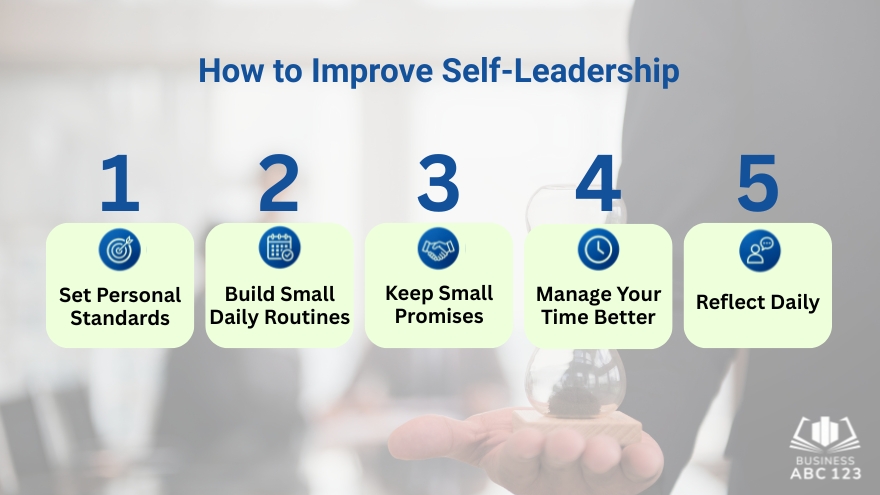
Step 1: Set Personal Standards
Decide how you want to behave daily.
Examples:
- Be on time
- Keep promises
- Finish important tasks first
- Stay calm under pressure
Standards shape behavior.
Step 2: Build Small Daily Routines
Use simple habits like:
- planning your day
- waking up consistently
- reviewing priorities
- exercising regularly
Small routines create long-term discipline.
Step 3: Keep Small Promises
Following through on small commitments builds self-trust.
Examples:
- complete a 10-minute task
- respond when you said you would
- finish today’s priority
Step 4: Manage Your Time Better
Focus on high-value tasks first and reduce distractions.
Try this:
- calendar blocking
- task lists
- phone-free focus time
Step 5: Reflect Daily
Ask yourself:
- What went well today?
- What did I avoid?
- What should I improve tomorrow?
Reflection speeds growth.
Self Leadership at Work and in Daily Life
At work, self-leadership shows through consistency and accountability. You don’t need a title to lead; you need reliability. In many careers, it becomes even stronger when paired with management and leadership fundamentals like planning, communication, and decision-making.
Examples include:
- Completing tasks without reminders
- Communicating early instead of delaying problems
- Staying calm under pressure
- Taking ownership of mistakes
Common Mistakes That Block Self-Leadership
Many people struggle because they:
- Wait for motivation instead of building habits
- Try to change everything at once
- Avoid responsibility
- Stay inconsistent with routines
Final Thoughts
Self-leadership is built through daily choices, not big speeches.
When you manage your habits, emotions, priorities, and commitments well, you become more reliable, confident, and effective in every part of life.
Lead yourself first. Everything else improves from there.
FAQs
What is self leadership?
Self-leadership means managing your own thoughts, emotions, habits, and actions without needing someone else to push you.
Why is self leadership important?
Self-leadership is important because it helps people stay disciplined, make better decisions, build trust, and lead others by example.
What are the strategies for improving self-leadership?
The best strategies include setting standards, building routines, practicing discipline, reflecting regularly, and taking responsibility for outcomes.
Why is self-awareness important in leadership?
Self-awareness helps leaders understand their strengths, weaknesses, emotions, and behavior so they can communicate better and make smarter decisions.
Which leadership style is characterized by firm self-confidence?
Transformational leadership is often associated with strong self-confidence because it inspires others through clear vision and belief.