

Human resources plays an important role in how companies hire, support, and retain employees. Understanding what HR people do helps you see how much goes on behind the scenes to keep a workplace running smoothly. From recruiting and onboarding to handling employee concerns and maintaining company policies, HR professionals manage a wide range of responsibilities. Their work touches both the business and the people, making their role essential in shaping company culture and day-to-day operations.
In this guide, we’ll break down what HR professionals do, including their daily tasks, key responsibilities, and how they contribute to a positive, productive work environment.
What Do HR People Do on a Daily Basis?
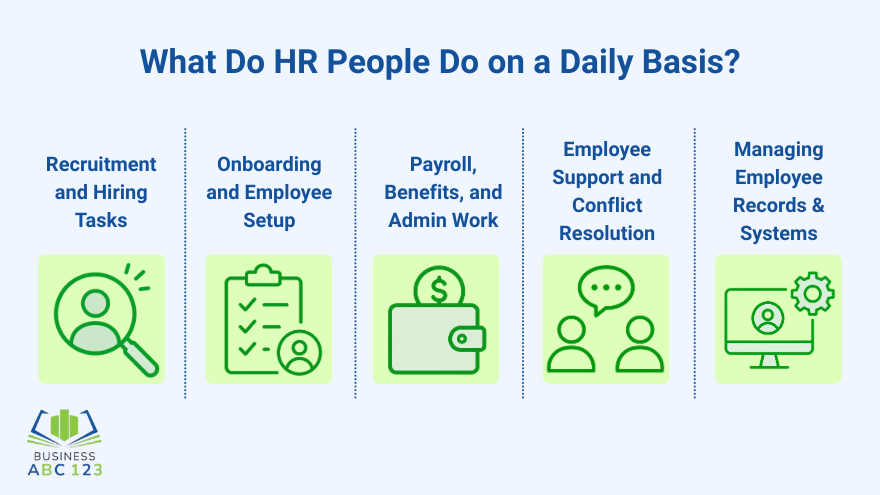
If you are wondering what HR people do every day, their work usually includes a mix of people support and admin tasks. These tasks are part of the core functions of human resource management that keep a business running smoothly.
1. Recruitment and Hiring Tasks
Hiring is one of the most visible HR responsibilities.
HR teams:
- Review resumes
- Schedule interviews
- Talk to candidates
- Coordinate with hiring managers
They make sure the company brings in the right talent.
2. Onboarding and Employee Setup
Once someone is hired, HR helps them get started.
This includes:
- Preparing contracts
- Setting up employee records
- Running orientation sessions
A smooth onboarding process helps new employees feel comfortable from day one.
3. Payroll, Benefits, and Admin Work
HR also handles employee pay and benefits.
They:
- Process salaries
- Answer questions about benefits
- Track leave and attendance
This part may seem routine, but it is critical. Employees rely on HR to get these details right.
4. Employee Support and Conflict Resolution
Employees often go to HR with concerns.
HR helps with:
- Workplace issues
- Conflicts between team members
- Questions about policies
This is a big part of what HR does. They help keep the workplace fair and respectful.
5. Managing Employee Records and Systems
HR keeps track of important information.
They:
- Update every employee’s data.
- Maintain records accordingly.
- Use HR systems to stay organized and understand the benefits of HR management systems for better efficiency.
Accurate records help the company run smoothly.
HR Responsibilities That Drive the Business
Beyond daily tasks, HR has broader responsibilities that affect the entire company.
Talent Acquisition and Workforce Planning
HR plans ahead. They look at future hiring needs and make sure the company has the right people in place. HR plans hiring based on future needs.
They:
- Identify skill gaps
- Build hiring pipelines
- Prepare for growth
Employee Engagement and Retention
Keeping employees happy matters.
HR works to:
- Improve workplace culture
- Recognize employee efforts and find ways to motivate employees with incentives
- Reduce turnover
When people feel valued, they stay longer and perform better.
Performance Management
HR supports employee growth.
They:
- Run performance reviews
- Help managers give feedback
- Set goals for improvement
This keeps teams aligned and focused.
Compensation and Benefits Management
HR ensures fair pay.
They manage:
- Salary structures
- Bonuses
- Benefits packages
This helps attract and retain talent.
Compliance and Workplace Policies
Every company must follow rules. HR ensures the business complies with labor laws and company policies. This reduces risk and protects both the company and employees.
Training and Development
HR helps employees grow their skills.
They organize:
- Training sessions
- Learning programs
- Leadership development
This prepares employees for future roles.
Why HR Is Important in Every Business
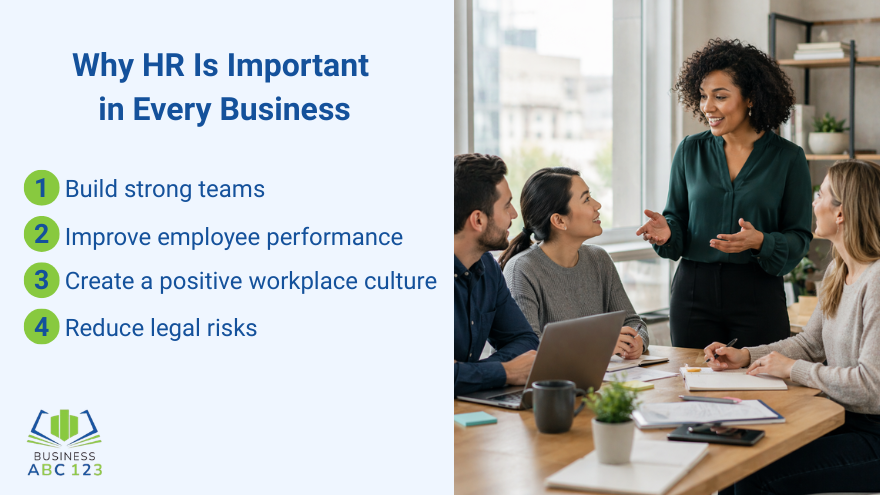
HR is more than a support function. Understanding why human resource management is important shows its real impact on business success.
It plays a key role in business success.
HR helps:
- Build strong teams
- Improve employee performance
- Create a positive workplace culture
- Reduce legal risks
Without HR, companies often struggle with organization and employee satisfaction.
Skills Every HR Professional Needs
To handle all these responsibilities, HR professionals need strong skills.
Some of the most important ones include:
- Clear communication
- Problem-solving
- Organization
- Emotional awareness
- Decision-making
These skills help HR handle both people and processes effectively.
Challenges HR Teams Face Today
HR teams deal with real challenges every day.
Some of the most common include:
- Managing remote and hybrid teams
- Handling employee expectations and learning how to prevent employee burnout
- Balancing company goals with employee needs
These challenges make HR even more important in modern workplaces.
How HR Supports Business Growth
HR is not just about managing people. It also helps businesses grow.
They do this by:
- Hiring the right talent
- Improving team performance
- Building a strong workplace culture
When HR works well, the whole company benefits.
Final Thoughts
So, what does HR do? They do a lot more than most people realize. From hiring and onboarding to employee support and business planning, HR touches almost every part of a company. If you have ever wondered what HR people do or what HR does, now you know. They keep everything running smoothly behind the scenes. Strong HR leads to strong teams. And strong teams drive business success.
FAQs
What does HR do on a daily basis?
HR handles hiring, onboarding, payroll, employee support, and record management every day.
What do HR people do for employees?
They support employees by answering questions, resolving issues, and helping them grow in their roles.
What are the main responsibilities of HR?
HR manages hiring, performance, benefits, compliance, and employee relations.
Why is HR important in a company?
HR helps build strong teams, improve performance, and keep the workplace organized and fair.
What do people in human resources do in simple terms?
They manage people, support employees, and help the business run smoothly.