


Running a business today looks very different from how it did before. Files are no longer stuck on one computer. Teams don’t always sit in the same office. Customers expect faster service and easy access. This is where cloud computing comes in. You’ve probably heard the term, but you might still be wondering, is cloud computing actually useful in information technology? The short answer is yes. What matters more is how it supports IT systems in real, practical ways.
In this guide, we’ll walk through the relevance of cloud computing in information technology, how it fits into modern IT systems, and how businesses can use it without making things complicated.
What Is Cloud Computing in Information Technology?
Cloud computing sounds technical, but it’s actually simple. It means storing and accessing data and programs over the internet instead of your computer’s hard drive.
For example:
- Saving files on Google Drive instead of your desktop
- Using Dropbox to share documents
- Running apps through a browser instead of installing them
The main purpose of cloud computing is to make data and systems easier to access, manage, and scale. Instead of relying on one device, everything is stored online.
In business information technology, this approach helps IT systems stay flexible and easier to manage. Teams can access systems, update data, and support operations from almost anywhere.
How Cloud Computing Is Used in Information Technology Today
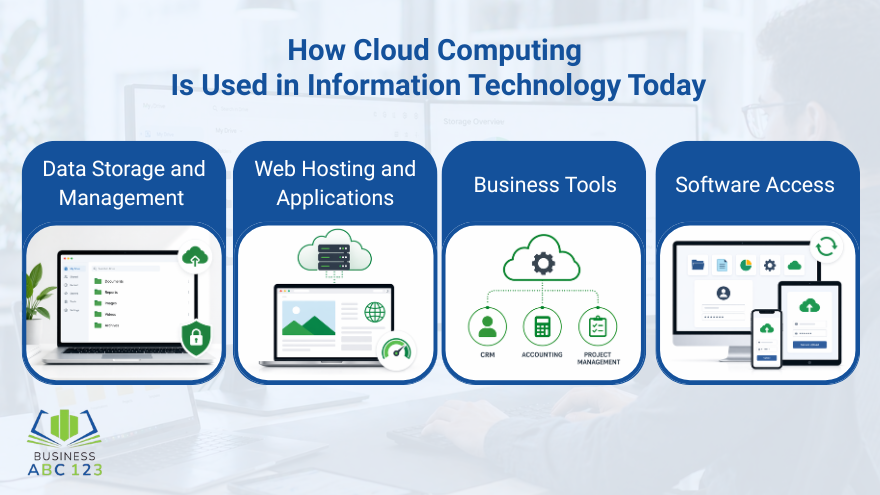
Now that the basics are clear, let’s look at how cloud computing is used in everyday IT operations.
1. Data Storage and Management
Businesses store files, records, and data online instead of using physical drives. This makes it easier for IT teams to organize and retrieve information.
2. Web Hosting and Applications
Websites and business applications run on cloud servers. This allows IT teams to manage updates and performance more efficiently.
3. Business Tools
Many tools used in business operations rely on cloud systems, such as:
- Customer management systems
- Accounting tools
- Project management platforms
These tools help IT teams support daily operations without managing complex systems.
4. Software Access
Instead of installing software on each device, employees can access tools online. IT teams can manage updates and access from a single place, saving time and reducing issues.
Benefits of Cloud Computing in Information Technology
Now that we’ve seen how cloud computing is used, let’s look at how it improves IT systems in practical ways.
Lower IT Costs and Easier Setup
Traditional IT systems require physical servers, maintenance, and upgrades. Cloud computing removes much of this need. IT teams can run systems without large upfront spending and avoid ongoing hardware costs.
Easy Access for IT Systems Anywhere
Cloud systems allow IT teams to manage operations from different locations. They can access systems, support employees, and resolve issues without being on-site.
Scalable IT Resources
As businesses grow, IT needs change. Cloud computing allows teams to increase storage, upgrade systems, and adjust tools without delays or complex setup.
Improved Team Collaboration
Cloud tools make it easier for teams to work together. Employees can share files, update systems, and stay in sync using online communication tools, while IT teams keep everything running smoothly in the background.
Better Data Security and Backup
Cloud service providers offer built-in security features like backups, recovery options, and access controls. This helps IT teams protect data and reduce the risk of data loss.
How Cloud Computing Supports Information Technology
Cloud computing changes how IT teams handle their daily work. Instead of relying on physical systems, they can manage everything through centralized platforms.
This allows IT teams to:
- Manage systems from one place instead of multiple devices
- Roll out updates faster without interrupting operations
- Monitor performance and fix issues more efficiently
It also reduces manual work. Tasks like software updates, backups, and system checks can be handled within the platform, saving time and reducing errors. For growing businesses, this makes IT operations more stable and easier to maintain without adding extra workload.
Why Cloud Computing Matters in Information Technology Systems
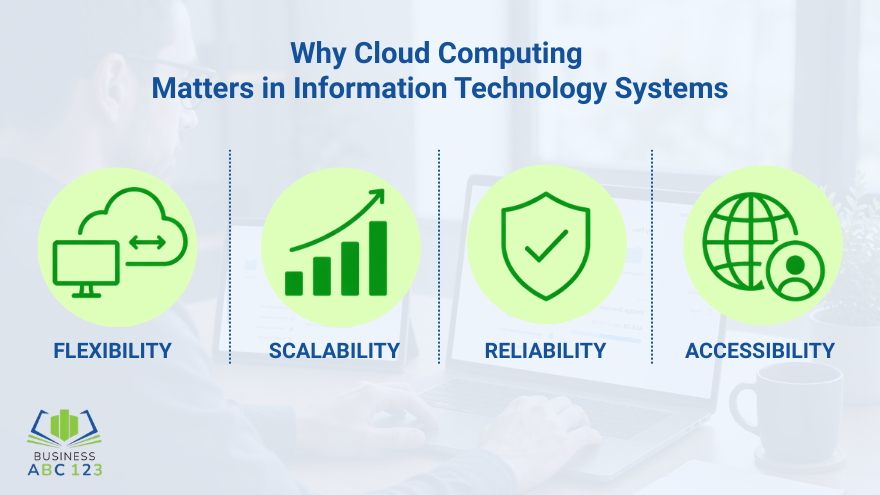
Cloud computing matters because it helps IT systems keep up with business needs. Traditional setups can slow things down, especially when systems depend on physical infrastructure.
With cloud computing, IT systems become more flexible and easier to adjust. Businesses can respond faster to changes, whether it’s scaling operations, adding new tools, or supporting remote teams while finding better ways to use technology to grow their business.
It also improves reliability. Systems can stay up and running with fewer interruptions, and data can be recovered quickly if issues happen. This is why the relevance of cloud computing continues to grow in information technology. It gives businesses a more dependable and adaptable way to manage their systems over time.
Final Thought
So, is cloud computing useful in information technology? Yes, and it has become a key part of how IT systems run today. It helps businesses manage systems more easily, adapt faster, and keep operations running without unnecessary delays. As technology needs continue to grow, cloud computing provides IT teams with a simpler, more reliable way to support the business.
FAQs
Is cloud computing useful in information technology?
Yes. Cloud computing allows IT systems to store data online, improve access, and scale resources without relying on physical infrastructure.
How can cloud computing benefit IT and staff?
It reduces maintenance tasks, simplifies system management, and allows IT teams to focus on improving operations and supporting users.
How can cloud computing help businesses?
It helps businesses reduce costs, improve collaboration, and provide better access to systems and tools.
What is the function of cloud computing?
Its main function is to store, manage, and process data online while allowing systems and applications to run without local servers.
Why is cloud computing important for business?
It improves flexibility, supports remote work, enhances data security, and helps businesses adapt to changing needs.