


Finance today runs on data. From daily transactions to market trends, businesses handle a constant flow of information. Making sense of it all can take time, and small errors can lead to bigger issues. This is where machine learning in finance comes in. It helps finance managers and finance advisors analyze data faster, spot patterns early, and make better decisions across corporate finance and business finance operations.
At the same time, it’s not just about speed and efficiency. Businesses also need to consider risks like data quality, security, and compliance. Understanding both the benefits and the challenges of machine learning in finance helps teams use it more effectively and make smarter decisions moving forward.
What Is Machine Learning in Finance?
Machine learning in finance is a system that learns from data and improves over time without constant human input. Think of it like a smart assistant that spots patterns, predicts outcomes, and even suggests actions.
For example:
- Banks can detect unusual activity in accounts to prevent fraud
- Investment firms can analyze historical trends for smarter decisions
- Corporate finance teams can forecast cash flows and spot budgeting issues
- Business finance departments can manage expenses and revenue tracking
At its core, AI in finance helps operations run more smoothly. When paired with explainable AI in finance, businesses can understand why AI makes certain recommendations, thereby building trust and keeping decision-making transparent. This is similar to broader technology trends, such as AI transforming business across industries.
Opportunities of Machine Learning in Finance
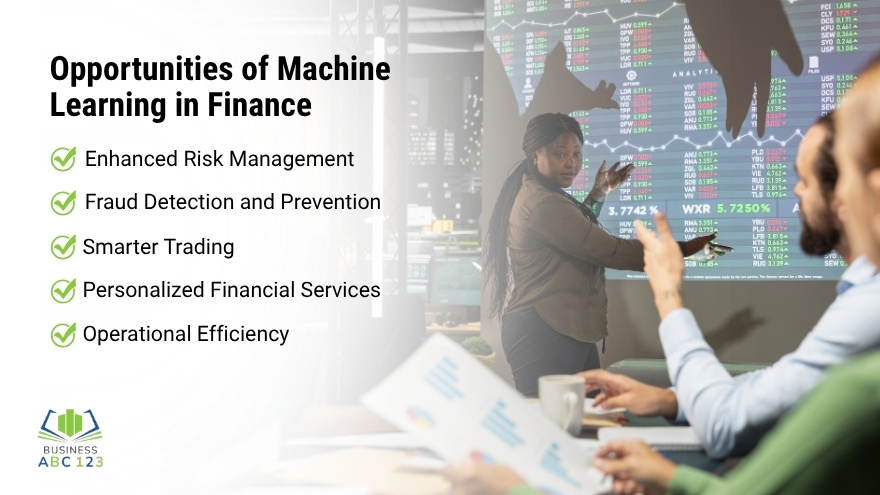
1. Enhanced Risk Management
Managing risk is a core part of corporate finance. ML can analyze data from loans, credit histories, and market trends to spot potential issues early. Finance managers can use these insights to reduce the chances of defaults or losses. For example, ML models can identify subtle patterns that might indicate a higher credit risk before it becomes a problem.
2. Fraud Detection and Prevention
Fraud is a major concern in business finance. ML systems can monitor thousands of transactions in real-time and flag anything unusual. For instance, if a credit card is suddenly used in another country, the system can immediately alert finance managers or advisors. This reduces losses and protects customers.
3. Smarter Trading
Machine learning can also support trading. Some firms use ML to analyze market data and predict trends. This helps finance managers make informed decisions. Algorithmic strategies can become more efficient with ML, reducing human error and improving returns.
4. Personalized Financial Services
ML can help finance advisors provide services that fit individual clients. Robo-advisors, for example, use data from a customer’s spending habits and goals to suggest investments. This creates a more personal experience for clients without needing one-on-one consultations.
5. Operational Efficiency
Many daily tasks in business finance are repetitive. ML can automate tasks like document processing, compliance checks, and report generation, freeing finance managers to focus on strategy and managing cash flow more effectively.
Potential Risks and Challenges of Machine Learning in Finance
1. Data Quality and Bias
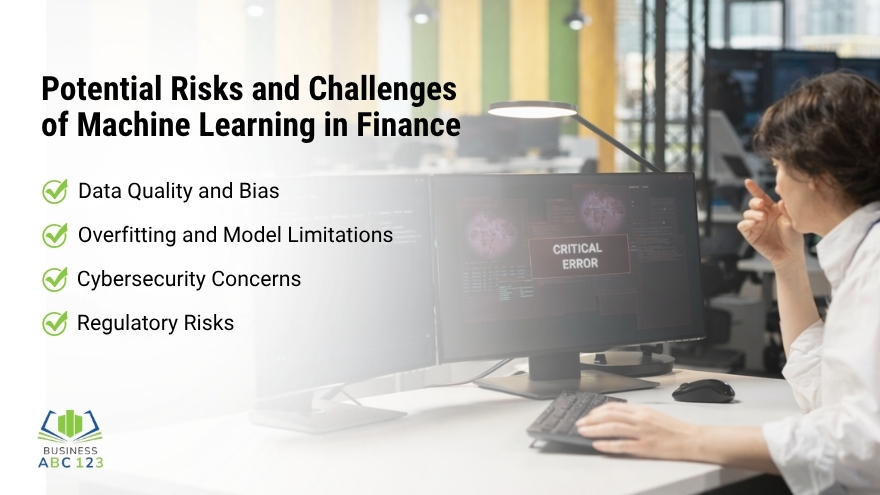
Machine learning is only as good as the data it uses. If the data is incorrect or biased, decisions may be flawed. For example, a model trained on outdated or skewed data could unfairly flag certain clients as high risk. Finance managers and advisors need to ensure the data is clean and reliable.
2. Overfitting and Model Limitations
Sometimes ML models perform very well on past data but fail with new situations. This is called overfitting. Financial markets are unpredictable, and models need constant updates to stay useful. Blind reliance on a system without human oversight can lead to mistakes.
3. Cybersecurity Concerns
Machine learning systems often handle sensitive financial data. This makes them a target for cyberattacks. Finance managers must ensure strong security measures protect corporate and business finance data from breaches.
4. Regulatory Risks
Finance is heavily regulated. ML models must comply with laws around lending, trading, and client protection. Firms need to make sure their systems are transparent and explainable to regulators, which can be challenging for complex models.
Real-World Examples of Machine Learning in Finance
- Banks use ML for faster loan approvals and fraud prevention
- Investment firms leverage ML to identify market opportunities
- Fintech companies use AI to improve client insights and services
These examples show how machine learning in finance can improve efficiency, accuracy, and client satisfaction when used responsibly.
How to Implement Machine Learning in Finance
Getting started doesn’t have to be complicated:
- Start small with pilot projects to test results
- Collaborate between finance managers, finance advisors, and data teams
- Monitor performance and update models regularly
- Focus on explainability, so decisions are transparent to stakeholders and regulators
Combining human judgment with ML creates better outcomes. Finance managers should see it as a tool to enhance decision-making rather than a replacement.
The Future of Machine Learning in Finance
Machine learning in finance will likely become more important. Predictive analytics can help firms anticipate market changes. AI finance tools may automate more advisory and operational tasks. This aligns with broader essential technologies for new businesses that support smarter operations and growth. Explainable AI in finance will make systems more transparent, which is vital for compliance and trust. Finance managers and finance advisors who use these tools responsibly will be better positioned to make smart, informed decisions.
Final Thought
Machine learning in finance, including Artificial Intelligence, offers real opportunities for corporate finance, business finance, finance managers, and finance advisors. From improving risk management and fraud detection to streamlining trading and daily operations, ML can make financial work faster, more accurate, and easier to manage.
At the same time, attention to data quality, security, and regulatory compliance is essential. Using ML responsibly gives finance teams a practical way to stay ahead, make better decisions, and support business growth.
FAQs
What is machine learning in finance?
Machine learning in finance refers to systems that analyze data, learn from patterns, and improve decision-making over time. It helps businesses automate tasks, manage risk, and improve financial accuracy.
How can machine learning be used in finance?
Machine learning can be used in finance for fraud detection, risk management, trading analysis, customer insights, and automating routine tasks like reporting and compliance checks.
How to implement machine learning in finance?
Start with small projects, use clean, reliable data, involve finance managers and data teams, monitor results regularly, and prioritize transparency to ensure accurate, trustworthy outcomes.
How does machine learning help finance managers and advisors?
It helps finance managers and finance advisors analyze data faster, reduce manual work, and make more informed decisions based on real-time insights.
What are the risks of using machine learning in finance?
Common risks include poor data quality, model errors, security threats, and compliance issues. These can be managed with proper oversight, regular updates, and strong data protection practices.