


Running a business means making money-related choices every day, and corporate finance plays a key role in those decisions. From investments to paying bills, it helps finance managers, finance advisors, and business owners manage resources, plan for growth, and keep operations on track. Understanding the basics of corporate finance ensures teams make smarter decisions and maintain financial stability across both corporate finance and broader business finance operations.
In this article, we’ll explore what corporate finance is, why it matters, and the core areas every finance manager and finance advisor should know. We’ll also look at practical ways businesses can apply these principles to improve cash flow, fund operations, and make informed investment choices.
What Is Corporate Finance?

Corporate finance is the area of finance that focuses on how businesses handle money, make investment decisions, and fund their operations. At its core, it’s about making smart choices to maximize value while managing risk.
Finance managers and advisors apply corporate finance principles every day. They help decide where to invest, how to manage cash, and how to raise money for growth. Corporate finance doesn’t just concern large companies; small and medium-sized businesses benefit from understanding these basics too.
Key tasks in corporate finance include:
- Budget planning and cash flow management
- Funding decisions for projects or expansion
- Risk assessment and mitigation
- Monitoring financial performance
Importance of Corporate Finance
Corporate finance is critical for keeping a business healthy. Without clear planning and control, even profitable companies can face cash-flow problems or make poor investment decisions.
Some key reasons corporate finance matters include:
- Supports Growth: Helps businesses decide when to expand and where to invest.
- Ensures Stability: Maintains healthy cash flow and ensures bills, salaries, and obligations are met, as businesses focus on managing cash flow effectively.
- Risk Management: Identifies financial risks and creates plans to reduce them.
- Informed Decision-Making: Gives finance managers and finance advisors the tools to make data-driven choices, including reviewing a business balance sheet to spot trends and plan effectively.
Core Areas of Corporate Finance
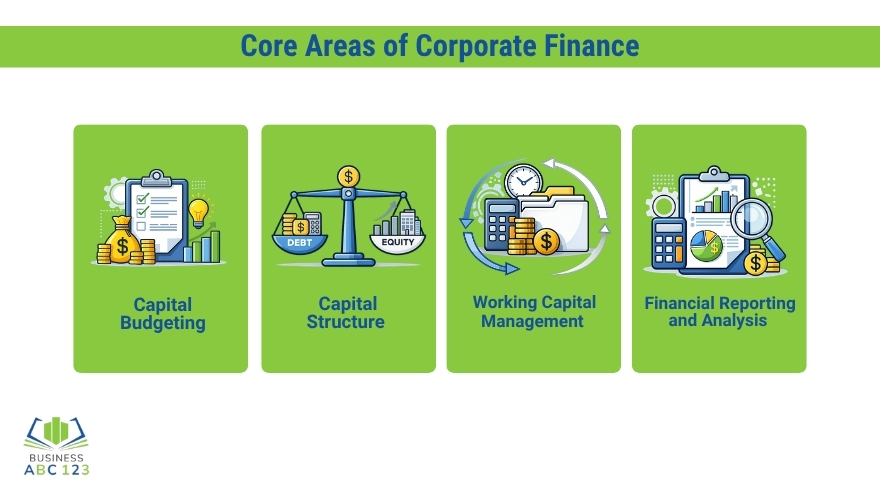
Corporate finance covers several essential areas that business leaders should understand.
These include:
- Capital Budgeting
This is about choosing which projects or investments to pursue. Finance managers analyze potential returns, costs, and risks to make smart investment decisions and align them with the right business strategy choices.
- Capital Structure
Businesses need to decide how to fund operations and growth through debt, equity, or a mix of both, and choose effective ways to finance assets.
- Working Capital Management
Day-to-day operations require careful management of cash, accounts receivable, and inventory. Proper working capital management keeps the business running smoothly and prevents cash shortages.
- Financial Reporting and Analysis
Regular reporting gives finance managers insight into performance. By analyzing trends and metrics, finance advisors can suggest improvements or identify warning signs early, and understanding financial management can help guide these decisions.
Corporate Finance vs Business Finance
It’s common to hear “corporate finance” and “business finance” used interchangeably, but there’s a difference.
- Corporate Finance focuses on long-term planning, investments, funding, and maximizing value for shareholders.
- Business Finance covers broader financial management, including budgeting, payroll, daily expenses, and short-term cash flow, and knowing the different types of business finance can guide smarter choices.
Understanding both areas allows finance managers and advisors to make balanced decisions that support immediate needs and long-term growth.
Tools and Techniques in Corporate Finance
Corporate finance uses several tools to analyze and manage financial decisions:
- Financial Ratios: Help evaluate performance and efficiency.
- Budgeting Software: Tracks income, expenses, and forecasts cash flow.
- Scenario Planning: Simulates different financial situations to test decisions.
- Investment Analysis: Evaluates potential projects or funding options in terms of risk and return.
These tools make it easier for finance managers and finance advisors to plan ahead and respond to challenges quickly.
Challenges in Corporate Finance
While corporate finance provides many benefits, there are challenges finance managers and finance advisors should watch for:
- Cash Flow Issues: Even profitable companies can run into trouble without careful monitoring, especially when dealing with slow-paying clients.
- Funding Risks: Borrowing or issuing equity can have long-term implications if not managed carefully.
- Market Uncertainty: Unexpected economic changes can affect investments and financial planning.
- Data Accuracy: Decisions are only as good as the information used. Reliable data is critical for sound corporate financial management, and taking steps to prevent cyberattacks helps keep financial data secure and trustworthy.
Practical Applications of Corporate Finance in Businesses
Corporate finance isn’t just theory; it’s applied every day in real business situations. For example:
- A finance manager might decide whether to lease new equipment or take a loan to buy it.
- Finance advisors can help small businesses manage seasonal cash flow issues.
- Companies use capital budgeting to determine if launching a new product is financially viable.
Practical Applications for Businesses
Corporate finance isn’t just theory; it’s applied every day in real business situations. For example:
- A finance manager might decide whether to lease new equipment or take a loan to buy it.
- Finance advisors can help small businesses manage seasonal cash flow issues.
- Companies use capital budgeting to determine if launching a new product is financially viable.
Even businesses without dedicated finance teams benefit from adopting corporate finance principles, like tracking spending, forecasting cash flow, and using accounting strategies to keep records organized and accurate.
Final Thought
Corporate finance is the backbone of any business. By focusing on cash flow, investments, funding decisions, and risk management, finance managers and finance advisors can guide companies toward growth and stability. Whether running a small business or managing a large corporation, mastering the basics of corporate finance is essential for smart, informed financial decisions. Applying these principles effectively helps businesses thrive, make better choices, and stay prepared for the future.
FAQs
What is corporate finance?
Corporate finance focuses on managing a company’s money, making investments, funding operations, and maximizing long-term value.
How can corporate finance help business finance?
It supports day-to-day operations, ensures cash flow, evaluates investment options, and helps finance managers make informed decisions.
What do finance managers do in corporate finance?
They oversee budgets, manage funding, analyze financial performance, and guide strategic decisions for growth and stability.
How do finance advisors use corporate finance?
Finance advisors provide insights, recommend strategies, and help businesses plan investments and manage risks effectively.
Why is corporate finance important?
It ensures businesses can meet obligations, grow sustainably, manage risks, and make smarter financial decisions.