

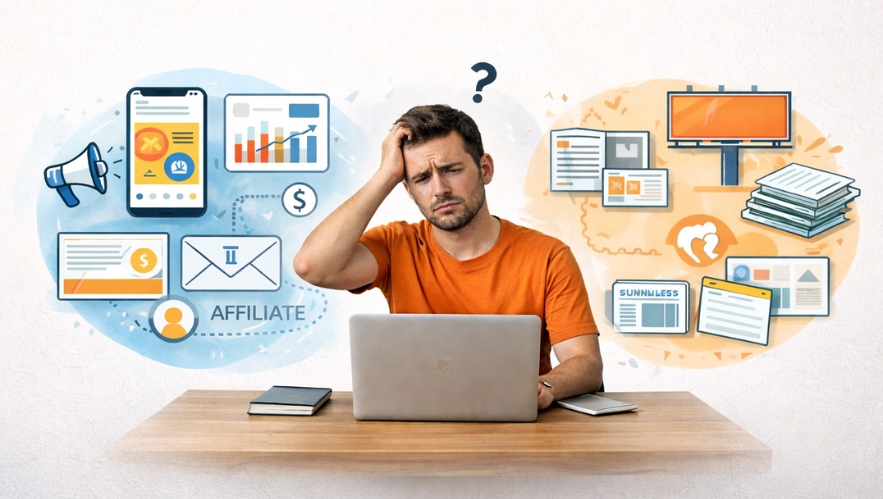
Marketing drives every business, but figuring out the best way to reach your customers can be tricky. Many small business owners and entrepreneurs face the same question: Should I spend on flyers, radio, or TV ads, or focus on social media, email campaigns, and online advertising? And as affiliate marketing becomes more popular, it can be even harder to know what actually brings results.
In this article, we’ll explore the difference between digital marketing and traditional marketing, show how affiliate marketing can fit in, and give practical tips to help you make more informed marketing choices for your business.
What is Traditional Marketing?

Traditional marketing covers the tried-and-true ways businesses have promoted themselves for decades. This includes things like print ads, billboards, TV and radio spots, brochures, and flyers.
Why it works:
- Builds trust, especially with local audiences.
- Tangible items like brochures or business cards create a lasting impression.
Challenges:
- Can be expensive, particularly TV or radio campaigns.
- Hard to measure exactly how many people saw your ad.
- Less targeted—you’re reaching a broad audience rather than just the people most likely to buy.
For example, a neighborhood bakery handing out flyers might attract a few new customers, but it’s hard to know which flyers actually led to sales.
What is Digital Marketing?
Digital marketing uses online channels to connect with your audience. This includes social media, email campaigns, content marketing, search engine optimization (SEO), pay-per-click ads, and affiliate marketing.
Why it works:
- More budget-friendly for small businesses.
- Easy to track performance using analytics.
- Enables you to reach defined audience groups based on their location, interests, and behaviors.
- Allows you to make changes quickly if a campaign isn’t working.
Challenges:
- Requires keeping up with trends and some technical know-how.
- Online competition is high, so standing out takes effort.
A small clothing store running Facebook ads and sending emails can see immediately who clicks, signs up, or buys a product and adjust the campaign to get better results.
Key Differences Between Digital and Traditional Marketing
| Feature | Traditional Marketing | Digital Marketing |
| Cost | High upfront costs | Flexible, often lower budget |
| Targeting | Broad, general audience | Highly targeted audience |
| Tracking | Hard to measure | Easy with analytics |
| Flexibility | Fixed once launched | Can adjust campaigns quickly |
| Engagement | One-way communication | Interactive and two-way |
How Affiliate Marketing Fits In
Affiliate marketing is a results-driven approach where third parties promote your products online in exchange for a commission on generated sales or leads.
It’s a great tool for small businesses because it expands your reach without a large upfront ad budget. For example, a blogger or influencer promoting your product can bring new customers directly to your website. Affiliate marketing also complements traditional marketing. You might hand out flyers with a link or QR code that directs to affiliate partnerships, giving your offline efforts more impact.
Choosing the Right Strategy
Choosing between traditional and digital marketing doesn’t have to be all-or-nothing. Consider these factors:
- Budget: How much can you spend upfront?
- Audience: Who are you trying to reach, and where are they most active?
- Goals: Are you focused on brand awareness, direct sales, or both?
- Industry: Some businesses benefit more from local exposure, while others benefit more from online reach.
Many successful businesses combine approaches. A local store might run a radio ad while also promoting online through social media and an affiliate program to accurately measure results.
Final Thought
Marketing doesn’t have to be confusing. When you understand the difference between digital marketing and traditional marketing helps you spend your money wisely, reach the right people, and grow your business efficiently. Incorporating affiliate marketing can extend your reach even further while keeping costs manageable.
Take Your Marketing to the Next Level
Want smarter marketing that actually works? Combine digital, traditional, and affiliate marketing strategies to reach more customers and track real results. Business ABC 123 can help you create marketing strategies that grow your business.
Contact us today to get started.
FAQs
What’s the difference between digital and traditional marketing?
Digital marketing uses online channels to reach targeted audiences, while traditional marketing relies on offline channels such as TV, print, and radio.
Can small businesses benefit from traditional marketing?
Yes! Local ads, flyers, and events help build trust and visibility in your community.
How does affiliate marketing fit into a marketing strategy?
Affiliate marketing lets others promote your products online for a commission, giving you exposure to new audiences without spending a fortune.
Which marketing method is cheaper?
Digital marketing is usually more cost-effective since you can target the right audience and measure results. Traditional marketing can be costly and harder to track.
Should I combine digital and traditional marketing?
Yes. Combining both can give you local credibility through traditional methods and measurable results online with digital marketing and affiliate programs.