


Every business wants to grow, attract customers, and stay ahead of competitors. But growth does not happen by accident. This is why knowing what a competitive strategy is in business matters. A competitive strategy is the plan a business uses to stand out, create value, and gain an edge in its market.
Without a clear strategy, many businesses struggle to stay consistent. They may chase trends, copy competitors, or compete only on price. That often leads to confusion and weaker results. A strong competitive strategy helps businesses stay focused, make smarter decisions, and build steady long-term growth. It all connects back to the bigger picture of how a business is planned and shaped, and having a solid grasp of business strategy basics makes it easier to see why these decisions matter in the first place.
What Is Competitive Strategy in Business
So, what is a competitive strategy in business in simple terms?
It is the approach a business uses to compete effectively in its industry by offering something customers value more than competitors.
This can include:
- Offering more affordable services
- Providing stronger customer support
- Specializing in a certain business area
- Building a trusted brand reputation
For example, a business consulting platform may compete by offering affordable startup guides, while another may focus on expert-level business resources for experienced entrepreneurs.
Competitive strategy is about choosing how your business will compete and why customers should choose you.
Why Competitive Strategy Matters for Business Growth
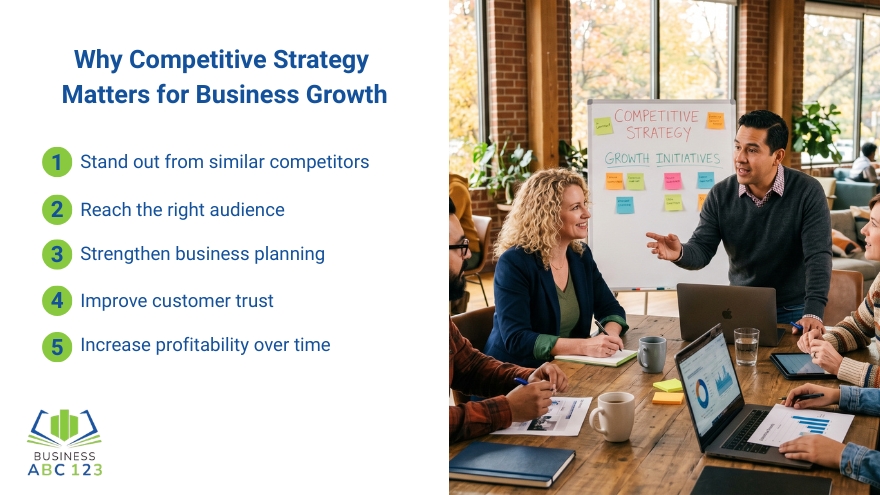
Businesses without a strategy often make reactive decisions instead of proactive ones.
A clear competitive strategy helps businesses:
- Stand out from similar competitors
- Reach the right audience
- Strengthen business planning
- Improve customer trust
- Increase profitability over time
It also gives direction to daily decisions. Instead of trying to handle everything at once, businesses can focus on areas where they have a real advantage. Understanding this becomes clearer once you see how developing a business strategy actually works in real business situations, especially when turning plans into action.
For entrepreneurs and small businesses, this is especially important because resources are often limited. A clear strategy helps avoid wasted time and money.
The 3 Main Types of Competitive Strategy
Most businesses use one of three main competitive strategies.
Cost Leadership Strategy
This strategy focuses on offering lower prices while maintaining acceptable value.
Businesses often do this through:
- Lower operating costs
- Efficient systems
- Streamlined services
- Budget-friendly offerings
Example: A business resource website may offer affordable educational tools for startups compared to more expensive consulting firms.
This works best when customers are looking for practical solutions at lower costs, and it connects closely withsmall business marketing since reaching the right audience depends on how the offer is presented.
Differentiation Strategy
Differentiation focuses on offering unique value.
This can include:
- Specialized business insights
- Better educational resources
- Stronger customer service
- Unique branding
- Industry-specific expertise
Customers are often willing to pay more or stay loyal because they see added value.
Example: A business platform may stand out by offering expert entrepreneurship resources, practical business strategies, and easy-to-understand guides for growing companies.
This strategy works well when businesses focus on quality and trust.
Focus Strategy (Niche Strategy)
Focus strategy targets a smaller, specialized audience.
Instead of serving everyone, businesses concentrate on a specific market. Before narrowing down, it also helps to use a SWOT analysis guide to check your strengths so you can choose a niche that better fits your capabilities.
Examples include:
- Startup business education
- Small business financial advice
- Entrepreneurship growth resources
This allows businesses to better serve a targeted group and become more relevant within that space.
For many business resource websites, niche specialization creates stronger authority and audience trust.
How Competitive Strategy Connects to Daily Operations

Competitive strategy is not just about planning for growth. It also shapes how a business works every day. It affects marketing, pricing, customer support, and resource use. This is closely tied to how a business runs its day-to-day operations, and having a clear view of business operations helps connect strategy to real actions within the company. For example, a business focused on low-cost services will look for ways to reduce expenses and keep things efficient, while a premium brand may spend more on expert support and better service. A niche business will focus more on specific customer needs. When strategy and daily work align, the business stays consistent, and decisions become easier.
Final Thought
Knowing what a competitive strategy in business is helps businesses create direction, improve growth, and compete with purpose. Whether the focus is affordability, unique value, or niche specialization, the right strategy helps businesses stand out in crowded markets. A successful competitive strategy is about building around your strengths and creating consistent value for your audience. If you want to improve results over time, it also helps to focus on tracking strategy performance so you can see what is working and adjust when needed.
FAQs
What is a competitive strategy in business in simple words?
It is a plan businesses use to stand out from competitors and attract customers.
What are the three main competitive strategies?
Cost leadership, differentiation, and focus strategy.
Why is competitive strategy important?
It helps businesses grow, improve decision-making, and compete more effectively.
Can small businesses use competitive strategy?
Yes. Small businesses often benefit greatly from niche or differentiated strategies.
How do I choose the best competitive strategy?
Look at your market, customer needs, strengths, and competitors before deciding.