


AI in finance is becoming a normal part of how banks and financial teams work every day. From checking transactions to helping customers, it helps speed things up and reduce errors. Banks deal with large amounts of data, and going through it manually takes time. With AI, they can process information faster and make better decisions without getting overwhelmed.
In this article, we’ll look at how artificial intelligence is changing the banking sector, where it’s used, and what it means for businesses and customers. We’ll also go through the benefits of AI in finance, the risks to watch for, and how banks are using it in real situations.
What Is AI in Banking?
AI in banking refers to the use of systems that analyze data, learn from patterns, and support decision-making. These systems help banks automate tasks, detect issues early, and improve services. If you’ve ever wondered how AI has been used in finance, banking is one of the most common areas. It’s used in payments, lending, fraud detection, and customer support.
How Artificial Intelligence Is Changing Modern Banking
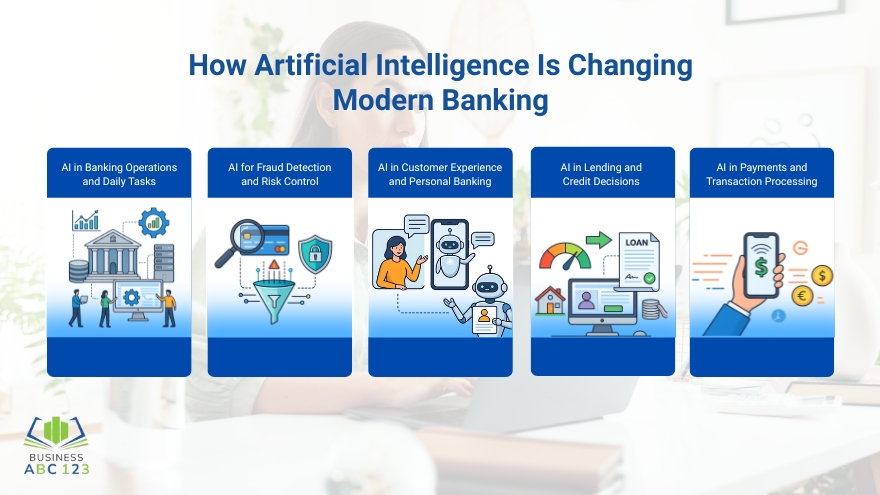
1. AI in Banking Operations and Daily Tasks
Banks handle a large number of daily processes. Many of these used to be done manually. AI now helps automate these tasks.
This includes:
- Reviewing loan applications
- Processing documents
- Generating reports
- Tracking transactions in real time
By handling routine work, AI allows bank staff to focus on higher-level decisions. It also improves speed and reduces errors, showing how AI helps businesses through smarter automation.
2. AI for Fraud Detection and Risk Control
Fraud is a major concern for banks. AI helps reduce this risk by monitoring transactions in real time. If something unusual appears, the system flags it immediately.
For example, a sudden transaction in a different country can trigger an alert or block.
This is a strong example of how AI is used in banking. It helps banks act quickly and prevent losses. AI also supports risk control. It reviews customer data and financial history to help banks decide who qualifies for loans and credit.
3. AI in Customer Experience and Personal Banking
Customer expectations have changed. People want fast and simple service. AI helps banks deliver that. AI chat systems can answer common questions anytime. Customers don’t need to wait for support. Banks also use AI to offer personalized suggestions. It can recommend savings plans or spending limits based on customer behavior. This improves customer experience and makes banking more convenient.
4. AI in Lending and Credit Decisions
Lending is a core part of banking. AI helps banks make faster and more accurate credit decisions. Instead of relying only on basic credit scores, AI looks at a wider range of data. This includes spending habits, payment history, and financial behavior.
This allows banks to:
- Approve loans faster
- Reduce default risk
- Offer more accurate credit assessments
It also helps expand access to credit for customers who may not fit traditional models.
5. AI in Payments and Transaction Processing
Payments are another key area where AI plays a role. AI helps banks process transactions quickly and securely. It can detect delays, identify errors, and ensure smooth transfers. It also improves payment security by checking patterns in real time. This reduces the chances of fraud during transactions. As digital payments grow, AI helps banks keep systems reliable and efficient.
Challenges of AI in Banking
While AI offers many benefits, banks still face challenges.
- Data quality: AI depends on accurate data. Poor data can lead to poor decisions.
- Security risks: Banks handle sensitive information. Strong protection and clear steps for cyber attack prevention are necessary to prevent breaches.
- Regulatory requirements: Banking is highly regulated. AI systems must follow strict rules and remain transparent.
- System limitations: AI is helpful, but it still needs human oversight to avoid mistakes.
Banks need to manage these challenges carefully to use AI effectively.
The Future of AI in Banking

AI will continue to shape banking in the coming years. Banks are likely to rely more on automation and data-driven decisions.
We can expect:
- Faster banking services
- Better fraud prevention systems
- More personalized customer experiences
As artificial intelligence in the banking sector advances, banks will be better equipped to meet growing demand and deliver more efficient services, showing how technology drives growth across industries.
Final Thought
AI in finance is already changing how banks operate. From daily tasks to fraud detection and lending, artificial intelligence in the banking sector helps improve speed, accuracy, and customer service. As banks continue to adopt AI, those that use it well will be better prepared to make smarter decisions and deliver better experiences.
FAQs
What is AI in banking?
AI in banking refers to systems that analyze data, automate tasks, and help banks improve decision-making and customer service.
How is AI used in banking today?
Banks use AI for fraud detection, loan approvals, transaction monitoring, and customer support.
How has AI been used in finance through banking?
AI has been widely used in banking to automate processes, improve risk control, and enhance customer experience.
What are the benefits of AI in banking?
AI helps banks work faster, reduce errors, improve security, and provide better customer service.
Is AI important in the banking sector?
Yes, artificial intelligence in the banking sector helps banks stay efficient, manage risks, and meet customer expectations.