


Digital Transformation in Business Operations is changing how companies work on a daily basis. Businesses are now using digital tools to speed up tasks, reduce errors, and improve customer service. It is no longer just about using computers or software. It is about improving how the entire business runs, from internal processes to customer interactions.
Many companies are turning to automation, cloud systems, and real-time data to make better decisions and work more efficiently. This shift helps teams communicate better, respond faster, and stay organized even as work becomes more complex. As customer expectations continue to rise, businesses that adapt to digital tools are finding it easier to stay competitive and grow in a fast-moving environment.
What Is Digital Transformation?
Digital Transformation in Business Operations means using digital tools and modern technology to improve how a business operates day to day. It focuses on replacing slow manual tasks with faster systems that boost productivity, reduce errors, and improve customer service.
This includes cloud software, automation, improved communication tools, and real-time data to support smarter decisions. Strong business IT solutions help support these systems and improve daily operations. It is not just about moving paper files into computers, but about changing how a business operates from the inside.
From small businesses using online invoicing to large companies improving supply chain systems, digital transformation helps create smoother, faster, and more flexible operations that support better overall business performance.
Why Digital Transformation Matters More Than Ever
Businesses today face growing pressure to meet higher customer expectations, stronger competition, and constant market changes. Customers want faster service, smoother communication, and better digital experiences, which makes Digital Transformation in Business Operations more important than ever. By adopting digital tools and building an effective business strategy, businesses can improve efficiency, reduce costs, strengthen communication, support remote work, and make faster decisions using real-time data. Companies that invest in digital transformation are often better equipped to adapt, grow, and meet changing demands, while those that delay may struggle to stay competitive.
Core Benefits of Digital Transformation in Operations
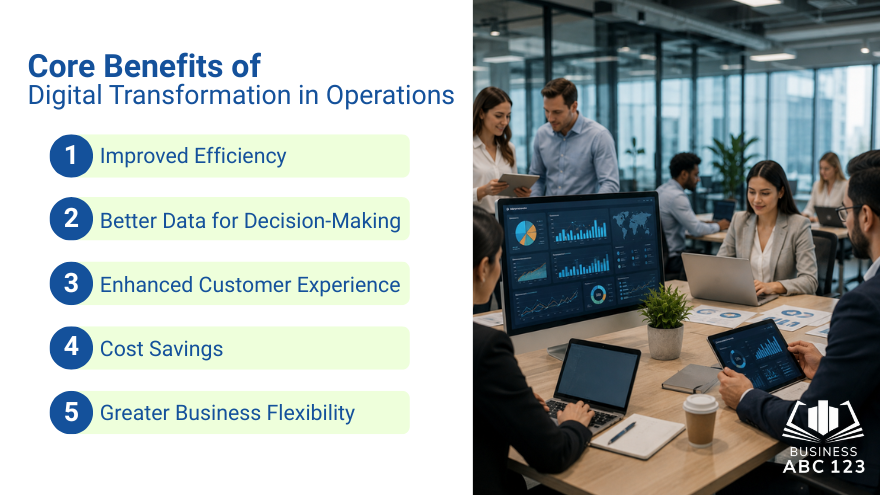
Improved Efficiency
One of the biggest advantages of digital transformation is better efficiency. Automation tools can handle repetitive tasks like scheduling, invoicing, inventory tracking, and customer follow-ups. Building clear standard operating procedures also helps keep these automated tasks consistent and well-organized.
This reduces:
- Manual errors
- Time-consuming tasks
- Administrative burdens
- Delays in operations
Employees can then focus more on important work that supports business growth.
Better Data for Decision-Making
Modern businesses rely on data to make smart choices. Digital systems provide real-time insights into sales, customer behavior, expenses, and operations.
This helps leaders:
- Identify trends
- Solve problems faster
- Improve forecasting
- Make stronger strategic decisions
Good data often leads to better outcomes.
Enhanced Customer Experience
Customer expectations continue to rise. People want faster support, personalized communication, and smooth experiences.
Digital tools improve customer service by offering:
- Live chat support
- Faster response times
- Personalized recommendations
- Online self-service options
Happy customers are more likely to stay loyal and recommend a business to others.
Cost Savings
Digital transformation often lowers operational expenses by reducing manual labor, minimizing waste, and improving resource use.
For many businesses, this means:
- Lower overhead costs
- Better profit margins
- More scalable systems
- Improved long-term sustainability
Greater Business Flexibility
Businesses must adapt quickly to market changes, customer trends, and disruptions. Digital systems make it easier to adjust operations without major setbacks.
This flexibility can be a major advantage during uncertain times.
Areas of Business Operations Most Affected by Digital Transformation
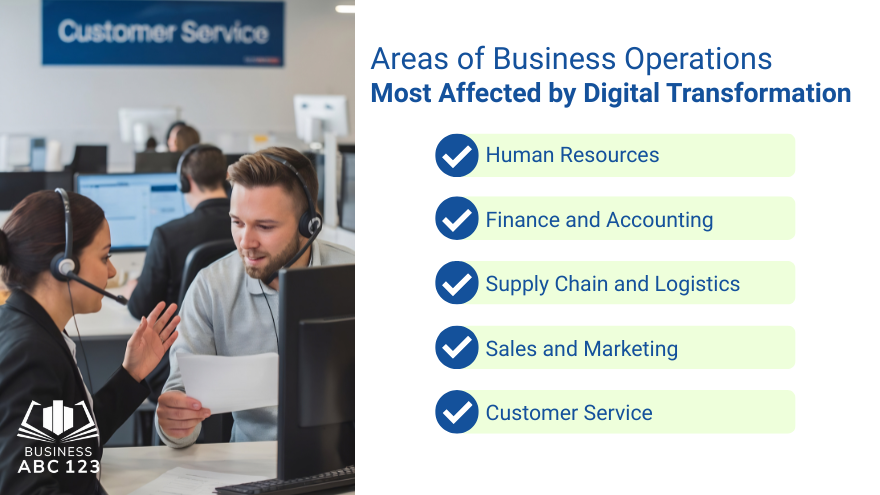
Human Resources
HR departments now use digital systems for:
- Hiring and recruitment
- Employee onboarding
- Payroll management
- Performance tracking
These tools simplify processes and improve employee experiences, especially when businesses invest in effective HR management systems.
Finance and Accounting
Digital tools help finance teams manage:
- Billing
- Expense reporting
- Financial forecasting
- Payment processing
Automation reduces errors and improves financial visibility.
Supply Chain and Logistics
Supply chains benefit greatly from digital transformation through:
- Real-time inventory management
- Delivery tracking
- Vendor coordination
- Demand planning
This improves speed and reduces costly disruptions.
Sales and Marketing
Sales and marketing teams use digital tools for:
- Customer relationship management
- Email campaigns
- Social media marketing
- Sales analytics
These systems improve lead generation and customer engagement.
Customer Service
Customer support has improved through:
- Automated help desks
- Chatbots
- Ticketing systems
- Knowledge bases
These tools help businesses respond more quickly and improve customer satisfaction.
The Future of Digital Transformation in Business Operations
Digital transformation will continue shaping how businesses operate in the years ahead. Technology is becoming a bigger part of daily business functions, and companies that continue improving will likely stay ahead.
Hyperautomation
Businesses are increasing automation across multiple departments. This creates smoother workflows and further reduces repetitive work.
Artificial Intelligence
AI will continue improving customer support, forecasting, and operational planning. Businesses will use smarter systems to improve speed and efficiency.
Connected Digital Ecosystems
More companies are linking their platforms, supplier systems, and customer systems. Strong cloud computing solutions help support this shift by improving collaboration, flexibility, and seamless operations. This creates stronger collaboration and more seamless operations.
Sustainable Business Practices
Digital tools are also helping businesses reduce waste, improve energy use, and support sustainability goals.
The future of business operations will likely focus on smarter systems, faster adaptation, and better customer experiences.
Final Thoughts
Digital Transformation in Business Operations is now a big part of how modern companies grow and stay competitive. It helps businesses work faster, reduce mistakes, and improve how they connect with customers and teams. From automation and cloud tools to better data use, these changes make daily operations smoother and more reliable.
As more companies move toward digital systems, the gap between traditional and modern operations continues to widen. Businesses that adapt early often gain better efficiency, lower costs, and stronger customer trust. In the end, Digital Transformation in Business Operations is not just a trend. It is becoming a normal part of how successful businesses run and stay ready for whatever comes next.
FAQs
What does digital transformation in business operations really mean?
It simply means using digital tools and technology to improve how a business runs day to day. This includes automating tasks, improving communication, and using data to make better decisions instead of relying on manual work.
Is digital transformation only for big companies?
No. Small businesses also benefit a lot from it. Even simple tools like online invoicing, cloud storage, or social media marketing can improve efficiency and help a small business grow faster.
What are the main benefits of digital transformation?
The biggest benefits are faster work processes, fewer errors, lower costs, better customer service, and smarter decision-making using real-time data.
What areas of a business are most affected by digital transformation?
Almost every part is affected, but the most common ones are HR, finance, sales and marketing, supply chain, and customer service. These areas often see the biggest improvements in speed and accuracy.
Is digital transformation a one-time process?
No, it is ongoing. Businesses keep improving their systems over time as new tools and technologies become available and customer needs change.