


Every business wants to grow. But growth depends on people. That is where HR plays a bigger role than most expect. It is no longer just about hiring or payroll. HR shapes how teams perform, how leaders manage, and how culture develops over time.
Many companies still treat HR as a support function. They focus on basic tasks and miss the bigger impact. Strong HR management strategies help businesses stay organized, improve performance, and keep employees engaged.
When HR works well, everything else becomes easier.
What Are HR Management Strategies?
HR management strategies are clear plans that help businesses manage employees to support company goals.
They focus on:
- Hiring the right people
- Supporting employee growth
- Improving performance
- Keeping teams engaged
A strong human resources management strategy connects people with purpose. Employees understand their roles and how they contribute to results.
HR Management Strategies That Actually Work
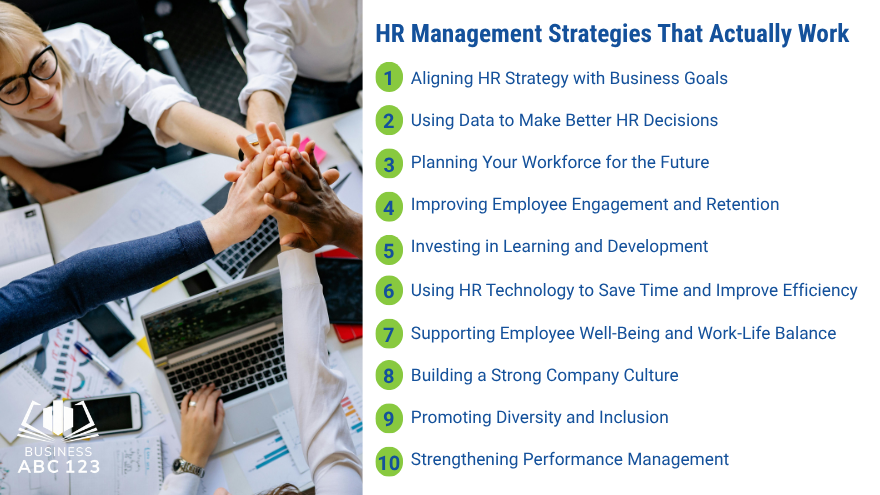
1. Aligning HR Strategy with Business Goals
This is where everything starts.
If HR works separately from business goals, teams lose direction. People stay busy, but progress slows down.
Strong HR management strategies connect daily work with long-term goals.
What works:
- Clear company goals that everyone understands and strong workplace communication strategies.
- Linking employee performance to business outcomes.
- Regular check-ins to stay aligned.
When people see how their work matters, they stay focused and motivated.
2. Using Data to Make Better HR Decisions
Guesswork leads to poor decisions. Data brings clarity.
Many companies now use data to track performance, hiring success, and employee turnover. This helps leaders spot problems early.
What works:
- Tracking hiring and retention trends.
- Reviewing employee performance regularly.
- Using insights to improve decisions.
A smart human resources management approach uses data to guide actions rather than relying on assumptions.
3. Planning Your Workforce for the Future
Hiring only when there is an urgent need creates stress.
Workforce planning helps businesses prepare in advance. It looks at future needs and identifies skill gaps early.
What works:
- Forecasting hiring needs.
- Building a talent pipeline.
- Developing current employees.
This is one of the strengths of human resource management. It helps businesses stay prepared rather than reacting too late.
4. Improving Employee Engagement and Retention
People do better work when they feel valued.
Low engagement leads to poor performance and high turnover. Replacing employees takes time and money.
What works:
- Regular feedback and open conversations.
- Recognition for effort and results, including ways to motivate employees with incentives.
- Opportunities for growth.
Engaged employees stay longer and contribute more.
5. Investing in Learning and Development
Skills need to grow with the business.
When companies invest in employee training, they build stronger teams.
What works:
- Training programs that build real skills.
- Mentorship and coaching.
- Leadership development.
One of the key strengths of human resource management is helping people grow while supporting business needs.
6. Using HR Technology to Save Time and Improve Efficiency
Manual work slows everything down.
HR technology helps automate routine tasks like payroll, attendance, and recruitment. Understanding the benefits of HR management systems can help you choose the right tools. This gives HR teams more time to focus on strategy.
What works:
- Cloud-based HR systems.
- Automated processes.
- Tools for tracking performance and data.
Simple tools can make a big difference in how smoothly things run.
7. Supporting Employee Well-Being and Work-Life Balance
People cannot perform well if they are tired or stressed.
Well-being is no longer optional. Taking steps to prevent employee burnout directly improves productivity and retention.
What works:
- Flexible work arrangements.
- Encouraging time off.
- Providing support for mental health.
When employees feel supported, they bring more energy to their work.
8. Building a Strong Company Culture
Culture shapes how people behave at work.
It is built through daily actions, not just words. HR plays a big role in shaping this environment.
What works:
- Clear values that guide behavior.
- Open communication.
- Fair and respectful treatment.
A strong culture keeps teams connected and focused, especially when you know how to handle toxic employees early.
9. Promoting Diversity and Inclusion
Diverse teams bring different ideas and perspectives.
This leads to better decisions and stronger results.
What works:
- Fair hiring practices.
- Equal opportunities for growth.
- Inclusive policies.
Businesses that value inclusion attract better talent and build stronger teams.
10. Strengthening Performance Management
Old-style annual reviews are no longer enough.
People need regular feedback to improve and stay on track.
What works:
- Frequent check-ins.
- Clear goals.
- Honest feedback.
Strong performance systems help employees stay focused and improve over time.
Common HR Mistakes That Hold Businesses Back
Even with good intentions, some mistakes can slow progress.
- Focusing only on admin tasks.
- Ignoring employee feedback.
- Lack of clear direction.
- Poor communication between HR and leadership.
Avoiding these mistakes is just as important as building the right strategy.
Benefits of Strong HR Management Strategies

When HR works well, the results are clear.
- Higher employee retention.
- Better productivity.
- Stronger culture.
- Improved business performance.
These outcomes show the real strengths of human resource management when done right.
Final Thoughts
HR management strategies are not just about managing people. They are about building a business that works.
When you align people with goals, support their growth, and create a positive work environment, everything improves. Teams perform better. Leaders make better decisions. Results become more consistent.
The impact of strong HR management strategies becomes evident over time. Small improvements add up and create lasting success.
FAQs
What are HR management strategies?
HR management strategies are plans that help businesses manage employees effectively, improving performance, retention, and overall results.
Why are HR strategies important?
They align employees with business goals, improve productivity, and help companies keep skilled workers.
What is the goal of human resources management?
The goal is to support employees while helping the business achieve its objectives.
What are the strengths of human resource management?
HR improves performance, builds culture, supports employee growth, and helps businesses stay organized.
How can HR improve employee performance?
By setting clear goals, giving regular feedback, and providing training, HR helps employees perform better.