
Running a business is not always straightforward. Some days things go well, and other days you feel stuck without knowing why sales are slow or why growth feels flat. This is where SWOT Analysis in Business Strategy becomes helpful. It gives you a simple way to step back and view your business from different angles, enabling you to make smarter decisions.
Instead of guessing what to fix or improve, SWOT helps you sort things clearly. You get to see what is working, what needs attention, what chances are available in the market, and what risks you should be careful about. It is a tool that many small and big businesses use to stay on track and plan better moves for growth.
What is SWOT Analysis in Business Strategy?
A SWOT Analysis in business strategy is a simple way to assess your business using four areas: Strengths, Weaknesses, Opportunities, and Threats. It helps you quickly see what is working, what needs improvement, and what outside factors may affect growth. Many business owners use it because it gives a clear view of the situation without needing complex tools. It is based on honest thinking and helps guide better decisions for business strategy, planning, and growth.
Why SWOT Analysis Matters for Your Business Strategy
SWOT analysis helps you make better decisions based on facts, not guesswork. When you clearly see your situation, you can plan better steps. It also connects closely with learning how to develop an effective business strategy that guides your business in the right direction.
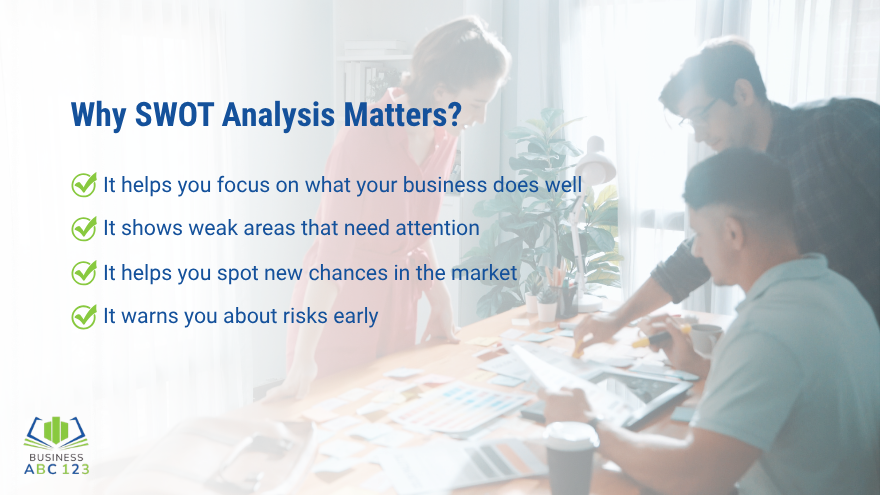
Here’s why it matters:
- It helps you focus on what your business does well
- It shows weak areas that need attention
- It helps you spot new chances in the market
- It warns you about risks early
Many small businesses skip this step and jump straight into action. That often leads to wasted
time and money. With SWOT analysis, you slow down a bit and think before acting. That small pause can save a lot later.
The 4 Elements of SWOT Analysis (With Examples)
Let’s break it down simply so it’s easy to apply.
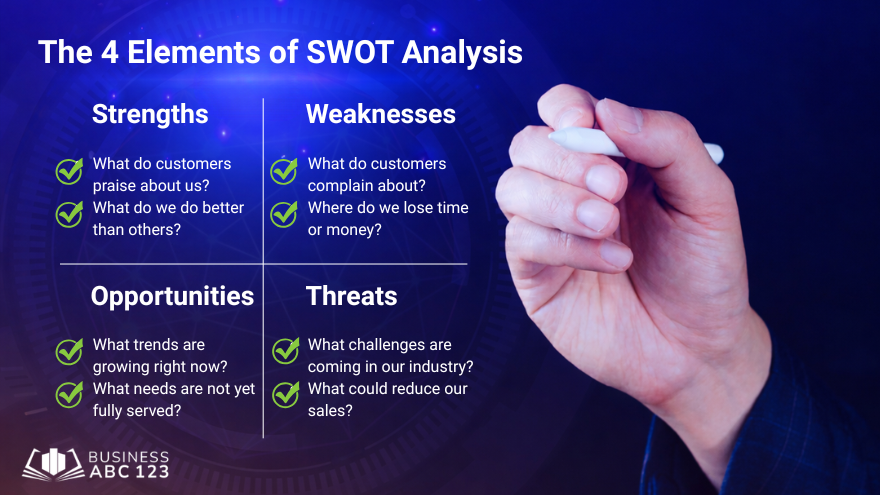
Strengths – What Your Business Does Best
Strengths are the things your business already does well. These are your internal advantages.
This can include:
- Skilled team members
- Good product quality
- Strong brand reputation
- Loyal customers
Example: A small coffee shop may have regular customers who come back every day because they love the taste and friendly service.
Ask yourself:
- What do customers praise about us?
- What do we do better than others?
Your strengths help you stand out in a crowded market.
Weaknesses – Where You Need Improvement
Weaknesses are internal issues that slow you down. Every business has them, and that’s normal.
Examples include:
- Limited budget
- Outdated tools or systems
- Lack of marketing reach
- Slow customer response
Example: A local online store may have great products but slow delivery times, which affects customer satisfaction.
Be honest here. This part may feel uncomfortable, but it helps you grow. If you ignore weaknesses, they can become bigger problems later.
Ask yourself:
- What do customers complain about?
- Where do we lose time or money?
Fixing weaknesses improves your overall business strategy, and learning how to improve business operations effectively can help address these issues faster.
Opportunities – External Chances to Grow
Opportunities come from outside your business. These are things you can take advantage of if you act at the right time.
Examples:
- Growing demand for your product
- New social media trends
- Possible partnerships
- New customer groups
Example: A bakery may notice more people ordering food for delivery, so they start offering online ordering too, and explore ways to make the business more profitable through these new opportunities.
Opportunities help you expand and reach more people. This is where market analysis becomes useful.
Ask yourself:
- What trends are growing right now?
- What needs are not yet fully served?
Threats – External Risks to Watch Out For
Threats are outside factors that can hurt your business. You cannot control them, but you can prepare for them.
Examples:
- New competitors entering the market
- Price changes in supplies
- Changing customer preferences
- Economic slowdown
Example: A small clothing shop may face competition from big online stores with lower prices.
Ask yourself:
- What challenges are coming in our industry?
- What could reduce our sales?
When you identify threats early, you can adjust your business strategy before problems grow.
SWOT Analysis Tips
- Start with real feedback. Talk to customers, staff, or partners. They often notice things you miss.
- Keep it simple. You don’t need long reports. A clear list is enough.
- Update your SWOT from time to time. Business situations change, so your analysis should also change.
- Focus on action. Don’t just list points. Turn them into steps. For example, if slow service is a weakness, think about how to improve response time.
Final Thoughts
SWOT Analysis in Business Strategy gives you a clear view of where your business stands and where you can take it next. It helps you make better decisions, avoid common mistakes, and spot growth opportunities early, especially for those learning how to be a successful entrepreneur. It also lets you notice patterns you might miss when you focus on daily tasks. Over time, you can use these insights to plan better and achieve more steady results.
At its core, SWOT analysis is a simple habit that keeps your business awareness sharp.
FAQs
1. What is SWOT analysis in simple words?
It is a tool that helps you check your Strengths, Weaknesses, Opportunities, and Threats in business.
2. Why is SWOT analysis important for business?
It helps you make better decisions and avoid mistakes by clearly understanding your situation.
3. How often should I do a SWOT analysis?
Many businesses do it every few months or whenever planning a new strategy.
4. Can small businesses use SWOT analysis?
Yes, it is very helpful for small businesses because it is simple and low-cost.
5. What is the main goal of SWOT analysis?
The main goal is to help you plan better by knowing what helps and what holds your business back.