


Starting a business without a big budget might sound unrealistic, but many successful ventures begin with little to no upfront investment. Knowing how to start a business with no money comes down to using what you already have, being resourceful, and focusing on ideas that require minimal capital. With the rise of online tools, freelancing platforms, and digital services, it’s easier than ever to launch a business without spending much. Skills, time, and creativity often matter more than money in the early stages, especially when you start small and grow gradually.
In this guide, we’ll break down how to start a business with no money, including practical steps, low-cost ideas, and strategies to build momentum so you can turn your idea into a real, sustainable business.
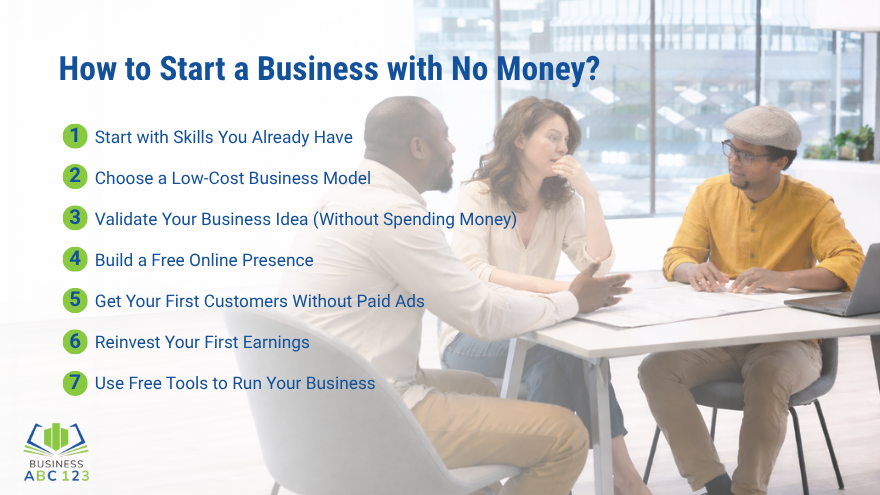
Step 1: Start with Skills You Already Have
The easiest way to start a business with no money is by using what you already know. You don’t need to create something completely new. You just need to solve someone’s problem.
Think about your current skills and how they can help others. Even simple skills can become valuable when applied correctly.
For example:
- Writing can turn into content or copywriting services
- An organization can turn into a virtual assistant work
- Social media knowledge can help businesses grow online
- Communication skills can support sales or customer service
You don’t need to be perfect. You just need to start and improve as you go.
Step 2: Choose a Low-Cost Business Model
Not all business ideas work without money, so choosing the right model matters. You want something simple you can start immediately, with no upfront costs.
Service-based businesses are often the best starting point because you’re offering your time and skills. You can also explore other options that don’t require inventory or large investments.
Some good options include:
- Service-based work like freelancing or consulting
- Digital products like guides or templates
- Affiliate marketing, where you promote products
- Local services you can offer in your area
The goal is to keep things simple and manageable in the beginning.
Step 3: Validate Your Business Idea (Without Spending Money)
Before you invest time into building anything, make sure people actually want it. This step is often skipped, but it can save a lot of effort.
Validation works best when you already have a clear idea of your offering and plan. Taking the time to develop a strong business plan, even a simple one, helps you know what to test and who to target. You don’t need a finished product; you just need to see if people are interested.
You can do this by:
- Talking to people who might need your service
- Posting your idea in online communities
- Offering a basic version of your service
- Seeing if someone is willing to pay or show real interest
If there’s little to no response, adjust your idea and try again.
Step 4: Build a Free Online Presence
You don’t need a website to get started. A simple online presence is enough to show people what you do and how you can help.
Today, there are many technologies for new businesses that make this easier than ever. Social media platforms, free design tools, and simple online systems allow you to share your work, connect with customers, and build trust all without spending money. Focus on one or two platforms and stay consistent.
Start by sharing:
- What your business offers
- Tips or insights related to your service
- Simple examples of your work
- Helpful content that builds trust
You don’t need perfect content. You just need to be clear and show up regularly.
Step 5: Get Your First Customers Without Paid Ads
Getting your first customer can feel uncomfortable, but it’s where everything starts. You don’t need ads. You just need to take action.
Start with people you already know, then expand from there. Keep your approach simple and direct.
You can try:
- Reaching out to your network
- Sending simple messages to potential clients
- Offering a free sample or discounted service
- Asking for referrals once you help someone
You only need one yes to get started.
Step 6: Reinvest Your First Earnings
Once you start earning, it’s important to use that money wisely. Instead of spending it on random things, focus on improving your business.
Reinvesting helps you grow faster and work more efficiently over time.
You can start with:
- Better tools that save time
- Small upgrades to your workflow
- Learning new skills that improve your service
Keep it simple and intentional.
Step 7: Use Free Tools to Run Your Business
Running a business doesn’t have to be expensive. There are plenty of free tools that can help you stay organized and productive.
In the beginning, simple tools are more than enough.
You can use:
- Google Docs for writing and documents
- Canva for basic designs
- Trello or Notion for task management
- Email for communication
Focus on getting things done instead of building a complicated system.
Types of Businesses You Can Start with Little or No Money

If you’re not sure where to begin, it helps to look at business types that naturally require little to no investment. These are usually flexible, simple to start, and based on skills or effort rather than money.
Some of the most practical options include:
- Freelance services like writing, design, or admin support
- Social media management for small businesses
- Online tutoring or coaching based on your knowledge
- Affiliate marketing through content or social platforms
- Selling digital products like templates or simple guides
- Local services such as cleaning, errands, or basic repairs
The best option depends on what you already know and what people around you need. Start with something manageable, then improve as you go.
Why Starting a Business with No Money Can Work in Your Favor
At first, starting a business with no money might feel like a disadvantage. It can seem like you’re behind before you even begin. But in many cases, it actually works in your favor. When you don’t have money to rely on, you’re forced to focus on what really matters. You learn how to sell, communicate, and solve real problems. You don’t waste time on things that don’t bring results.
It also pushes you to stay lean. Instead of spending on tools or setups you don’t fully understand yet, you figure things out step by step. That helps you avoid common mistakes and build something that actually works.
Common Mistakes When Starting a Business with No Money
It’s easy to make mistakes when you’re starting out, especially without a budget. Being aware of them can help you avoid delays.
Some of the most common ones include:
- Waiting too long before taking action
- Overthinking every step
- Choosing a business idea that needs money up front
- Skipping the validation stage
- Avoiding sales and customer outreach
Starting simple and staying consistent helps you avoid most of these.
Challenges You Should Expect (And How to Handle Them)
Starting a business with no money comes with challenges, especially in the beginning. Progress might feel slow, and you may face rejection or uncertainty.
You’ll also be handling everything yourself, which can feel overwhelming at times.
Some common challenges are:
- Slow results in the early stages
- Limited resources
- Managing multiple roles at once
- Staying motivated over time
The best way to handle this is to focus on small, consistent actions every day.
Final Thoughts
Starting a business with no money is possible if you focus on what you can control. You don’t need a perfect plan or a big budget. You just need to take action and stay consistent. Use your skills, keep things simple, and focus on helping people. That’s how real businesses grow. If you’ve been thinking about it for a while, this is your sign to start. Learning how to start a business with no money begins with one step.
FAQs
Can I really start a business with no money?
Yes, you can start a business with little or no money by leveraging your skills, existing resources, and free or low-cost tools. Many entrepreneurs begin by offering services online, using social media to market themselves, or starting with small-scale projects that don’t require significant upfront investment.
What are some business ideas that don’t require money?
Service-based businesses, freelancing, dropshipping, consulting, and digital content creation are all examples of ventures that require minimal startup capital. The key is to focus on areas where your knowledge, skills, or time provides value to others without needing to purchase inventory or expensive equipment.
How can I fund my business if I need some capital?
You can explore options like small personal loans, crowdfunding platforms, grants, or even pre-selling your product or service to raise initial funds. Many entrepreneurs also bootstrap by reinvesting early earnings to grow the business gradually without taking on significant debt.
How important is planning when starting a business with no money?
Planning is crucial because every decision counts when resources are limited. A clear plan helps you identify your target market, allocate time and effort efficiently, and make the most of free or low-cost tools to achieve growth.